

Advanced Wilderness First Aid & CPR (40-Hour Certification)
Hands-on wilderness first aid and CPR training for outdoor leaders working in remote settings with delayed emergency response. | Spring 2027 (Official Dates: Coming Soon)
SKIP To:
Course Overview
$650 + tax
Early Bird: 20% off until July 31, 2026
Ages
16+
Dates
Spring 2027 (Official Dates: Coming Soon)
Duration
5 Days
Location
Courtenay, British Columbia
Start & End Point
Camp Gilwell (5200 Duncan Bay Main Line Rd, Courtenay, BC)
Indigenous Territories
Traditional territory of the K’ómoks First Nation
Activities
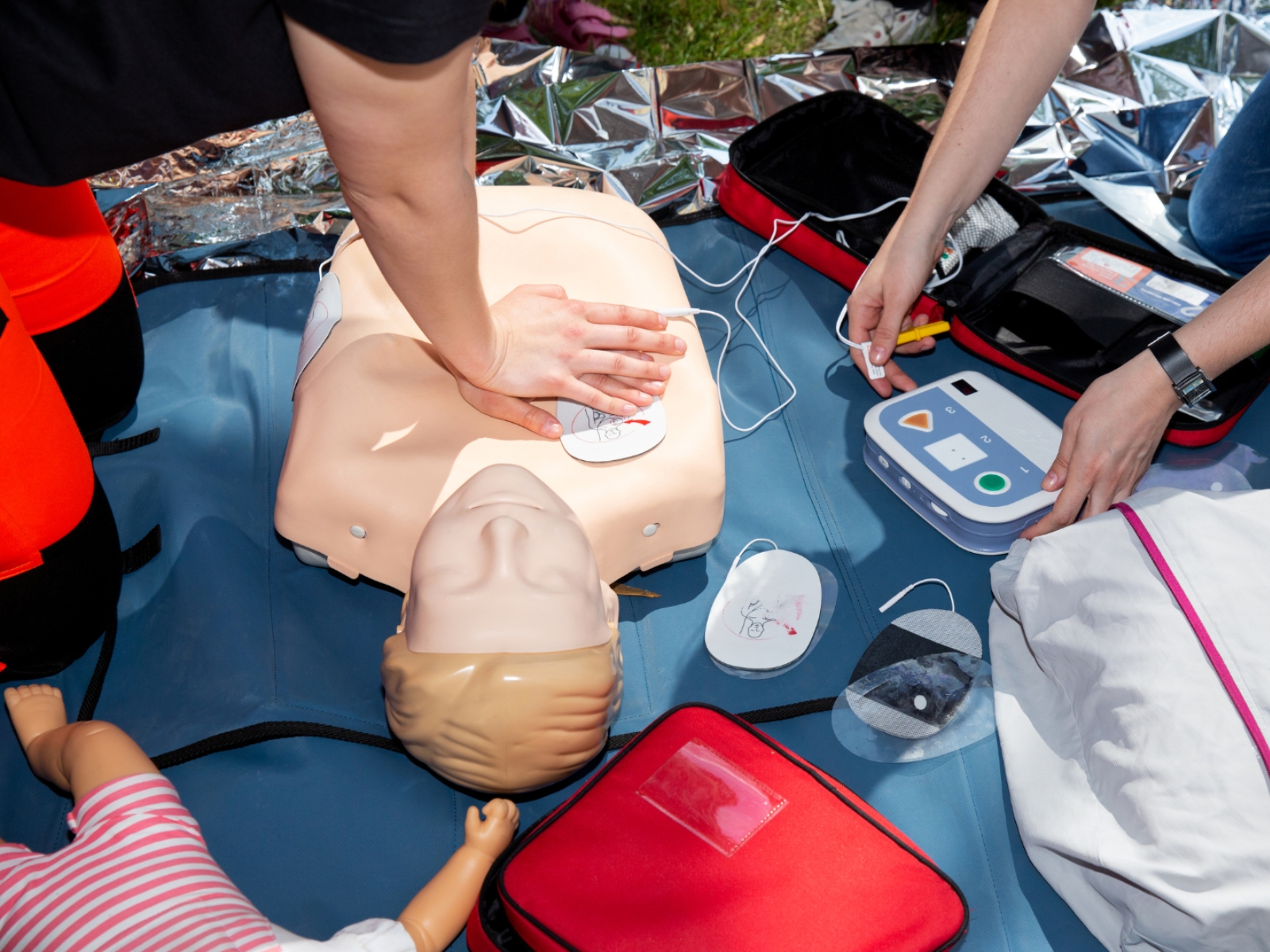
Wilderness First Aid Training, Emergency Response Scenarios, CPR-AED certification
COURSE OVERVIEW
This 40-hour certification course is designed for outdoor leaders working in remote settings where medical assistance may be delayed. Through hands-on training, participants learn how to assess and respond to injuries, illnesses, and environmental emergencies with confidence.
Delivered in partnership with SOLO, a leading provider of wilderness medicine training, the course combines practical scenarios, group learning, and real-world application. Participants leave with recognized certifications in Advanced Wilderness First Aid and CPR-AED, along with the skills to manage emergencies and support safe decision-making in the field.
*Note: with advance notice, individuals are able to recertify their WFR during this course.
Course Details
This intensive 40-hour course combines classroom learning with hands-on scenarios to prepare participants for medical emergencies in remote outdoor settings. Set at Camp Gilwell in Courtenay, BC, the training emphasizes practical decision-making, patient care, and real-world application in environments where help may be hours away.
Things to Know
Getting to your course is simple. We’ll provide full details once you register but here’s what to expect:
- Drop-off & Pick-up: Participants will meet directly at Camp Gilwell in Courtenay, BC, at designated arrival and departure times shared in advance
- Transportation Options: Participants are responsible for arranging their own transportation to and from the course location
- Parking: On-site parking is available at Camp Gilwell for participants driving to the course
- Support & Check-In: OBC staff will be on-site to welcome participants, confirm arrival, and support a smooth start to the course
Participants have the option to stay on-site at Camp Gilwell throughout the course.
- Camping: Tent camping is available on-site. Participants must bring their own camping gear
- Minors: Participants under 18 must be accompanied by a parent or guardian if staying overnight
- Facilities: The site includes outhouses, with access to showers and flush toilets when seasonal conditions allow
- Meals: Participants are responsible for their own meals. A rustic kitchen space is available for food preparation
- Refreshments: OBC will provide light daily refreshments such as coffee, tea, fruit, and snacks
Have questions? Our Admissions Team is here to help: admissions@outwardbound.ca
At OBC, every course combines hands-on learning, practical skills, and real-world application. This training is intensive and immersive, with each day building on the last through a mix of instruction, practice, and scenario-based learning.
Day 1 – Arrival & Introduction
- Arrive at Camp Gilwell and check in with instructors
- Meet the group and review course expectations and safety guidelines
- Introduction to wilderness medicine principles and patient assessment
- Evening session and course overview
Days 2–4 – Skills & Scenarios
Each day focuses on building practical skills and applying them in realistic situations:
Morning
- Review key concepts and learn new techniques
- Practice patient assessment, injury management, and emergency response skills
Daytime
- Scenario-based training in outdoor settings
- Focus on decision-making, teamwork, and managing care with limited resources
- Topics may include trauma, environmental emergencies, and evacuation planning
Evening
- Group debriefs and skill refinement
- Time to review material, ask questions, and prepare for the next day
Day 5 – Assessment & Certification
- Final scenarios and practical assessments
- Course wrap-up and feedback
- Certification completion and departure
We provide essential course materials and medical training equipment, so participants only need to bring personal items, clothing, and any required camping gear.
- Packing Checklist: A detailed checklist will be shared after registration to help you prepare
- Clothing & Footwear: Comfortable, weather-appropriate layers and sturdy footwear suitable for both indoor sessions and outdoor scenarios
- Camping Gear: Participants staying on-site should bring their own camping equipment
- Personal Essentials: Toiletries, medications, sun protection, insect repellent, and a reusable water bottle
- Health & Safety: Clearly label personal items and bring any required medications or medical information
Our instructors are more than course facilitators. They’re experienced educators and wilderness medicine professionals dedicated to helping participants build real-world skills with confidence.
- Highly Qualified: Certified in wilderness medicine, first aid instruction, and backcountry risk management
- Experienced Educators: Extensive experience teaching outdoor leaders, guides, and professionals in hands-on environments
- Certified Trainers: Courses are delivered in partnership with SOLO, a leading provider of wilderness medicine training
- Thoroughly Screened: Rigorous hiring process, credential checks, and vulnerable sector screening
- Supportive Approach: Instructors focus on practical learning, meeting participants where they are and building skills step-by-step
- Small Groups: Low instructor-to-participant ratios ensure personalized feedback and hands-on practice
“A ship is safe in the harbor, but that’s not what ships are for.” – William Shedd.
Risk and challenge are part of everyday life, and when approached with intention Risk and challenge are part of real-world learning, and when approached with intention and support, they become powerful tools for growth. In this course, risks are carefully managed to support a safe and effective learning environment while building practical skills in emergency response.
- Expert Instructors: Certified and trained in wilderness medicine, risk management, and emergency response
- Small Groups: Low instructor-to-participant ratios for for close supervision and support
- Reliable Systems: Well-maintained equipment, clear protocols, and structured scenarios that follow industry standards
- Emergency Preparedness: Instructors are trained in response and evacuation procedures, with access to communication systems as needed
- Dietary Support: We accommodate allergies and dietary restrictions with advance notice
- Personalized Care: Health forms are reviewed in advance, and participant care and wellbeing are supported holistically
- Learn More: See our Risk Management page for details on our practices
Participants leave with practical skills, increased confidence, and the ability to respond effectively in high-pressure situations.
- Emergency Response Skills: Learn to assess, treat, and manage injuries and illnesses in remote environments
- Decision-Making: Build confidence in making sound judgments with limited resources and delayed access to care
- Hands-On Practice: Apply skills through realistic scenarios that reflect real-world outdoor situations
- Communication & Teamwork: Work with others to coordinate care, manage incidents, and support group safety
- Professional Development: Gain recognized certifications that support work in outdoor leadership, guiding, and camp settings
Is this course right for me?
This course is a good fit for outdoor leaders, camp staff, guides, and anyone working or spending extended time in remote environments. It’s also well suited for those looking to build practical emergency response skills beyond standard first aid. No prior wilderness medicine experience is required, but participants should be comfortable learning in a fast-paced, hands-on environment.
FAQs
Here are a few questions we often get about this course. For more Frequently Asked Questions, click the button below.
View ALl FaQsAlthough being in nature can be described as therapeutic, it is important to note that Outward Bound Canada is not designed as a therapy program. Our instructors are trained in outdoor education and expeditionary travel and are not mental health professionals. The Outward Bound program can be very challenging both physically and mentally, and it is important to your success that you arrive with some healthy coping strategies to deal with these challenges.
Outward Bound is about ordinary people doing extraordinary things! Our courses are designed to challenge participants physically, emotionally and mentally. With a little preparation, you’ll feel more comfortable on the course overall. Students of all ages have successfully participated in wilderness adventures with us.
Overcoming challenges is one of the many tools we use to help you explore your personal potential. You will face physical challenges that are outside your routine, but motivation and the will to try are key to a successful Outward Bound experience. You can start now by engaging in activities that improve your endurance and cardiovascular fitness. Go for a walk, ride your bike, take a yoga class – whatever gets your body moving! On each course page you’ll find a rating and a description of the level of physical and social-emotional challenge the course offers. This gives potential participants an idea of the level of challenge they can expect in each course. Learn more about the levels.
If you are unsure about the physical requirements of your course, please contact one of our admissions coordinators at admissions@outwardbound.ca to find out more about the physical challenge you can expect in each course. When completing the confidential medical history form, please answer all questions honestly and provide as much detail as possible so that we can help you prepare. We are committed to ensuring the wellbeing of you and your group.
A detailed menu is planned before each program, which may change based on a number of factors. We can accommodate many dietary restrictions and most food allergies. Please provide as much detail as possible about your dietary restrictions and allergies on your confidential medical history form. We may ask you for further information so that we can plan your menu.
Participants will receive sufficient calories through the physical activities on the course. It is not necessary for you to bring your own food to the course. Please speak to the Admissions Department to make sure you understand the dietary concerns of the other participants before packing any extra snacks.
You won’t need it – course participants enjoy a vacation from technology! Your cell phone and other personal items you won’t need (wallet, music player, plane tickets, etc.) will be safely stored in our office nearby while you’re in the wilderness.
Once the course begins, you won’t be able to contact anyone at home, you will be immersed in the Outward Bound experience – building a connection to yourself, to others and to nature! Please know that the instructor team has a plan for you to get in touch with our office and your emergency contacts at home in case of an emergency.
Our Cancellation Policy takes into account the fact that most of the costs for your expedition will be incurred before you arrive at your program. Please let us know as soon as possible if you will not be able to attend the program. Please refer to our Cancellation and Refund Policy.