If you’ve scrolled through “Teacher-TikTok” or the Ontario Teachers’ Reddit lately, you’ve seen the warning signs. Teachers from Halifax to Vancouver are describing a reality that feels fundamentally different from just a few years ago: students who struggle with basic social skills, can’t tie their own boots, have difficulty holding a pencil, and can’t go ten minutes without reaching for a screen.
What once felt like isolated stories now reads like a pattern emerging across Canadian classrooms. While venting online may take the edge off, it does not answer the harder question underneath the frustration. If young people are growing up in a world that moves faster and demands more independence than ever, how do we help them build the focus, discipline, and confidence to handle it?
What research across Canada is showing
Frustrated educators aren’t imagining it. The pattern shows up in policy decisions and research across the country.
An October 2025 SickKids study found a direct link between high screen time and a 10% drop in academic achievement among Ontario students. At the same time, provinces have been responding to rising behavioural challenges. In April 2025, Nova Scotia introduced a strengthened Provincial School Code of Conduct following a rise in violence and serious incidents in schools. That same month, the Crisis in the Classroom report documented record levels of emotional outbursts. By early 2026, Quebec experienced a “break in services” as specialized staff left the system, placing more responsibility on classroom teachers managing complex needs with limited support.
Academic concerns are surfacing as well. Alberta passed legislation mandating early literacy and numeracy screenings to ensure children are not falling behind before Grade 4, and Ontario’s 2026 “Back to Basics” direction reflects similar concern about declining foundational skills.
Across provinces, the message is consistent: attention spans are weakening, emotional regulation is harder, and foundational skills need reinforcement.
Bridging the gap through real-world experience
The provincial mandates and studies across Canada show that the “basics” extend beyond academics. Literacy and numeracy depend on something underneath them, including sustained attention, self-control, accountability, and the ability to contribute to a group even when it is uncomfortable.
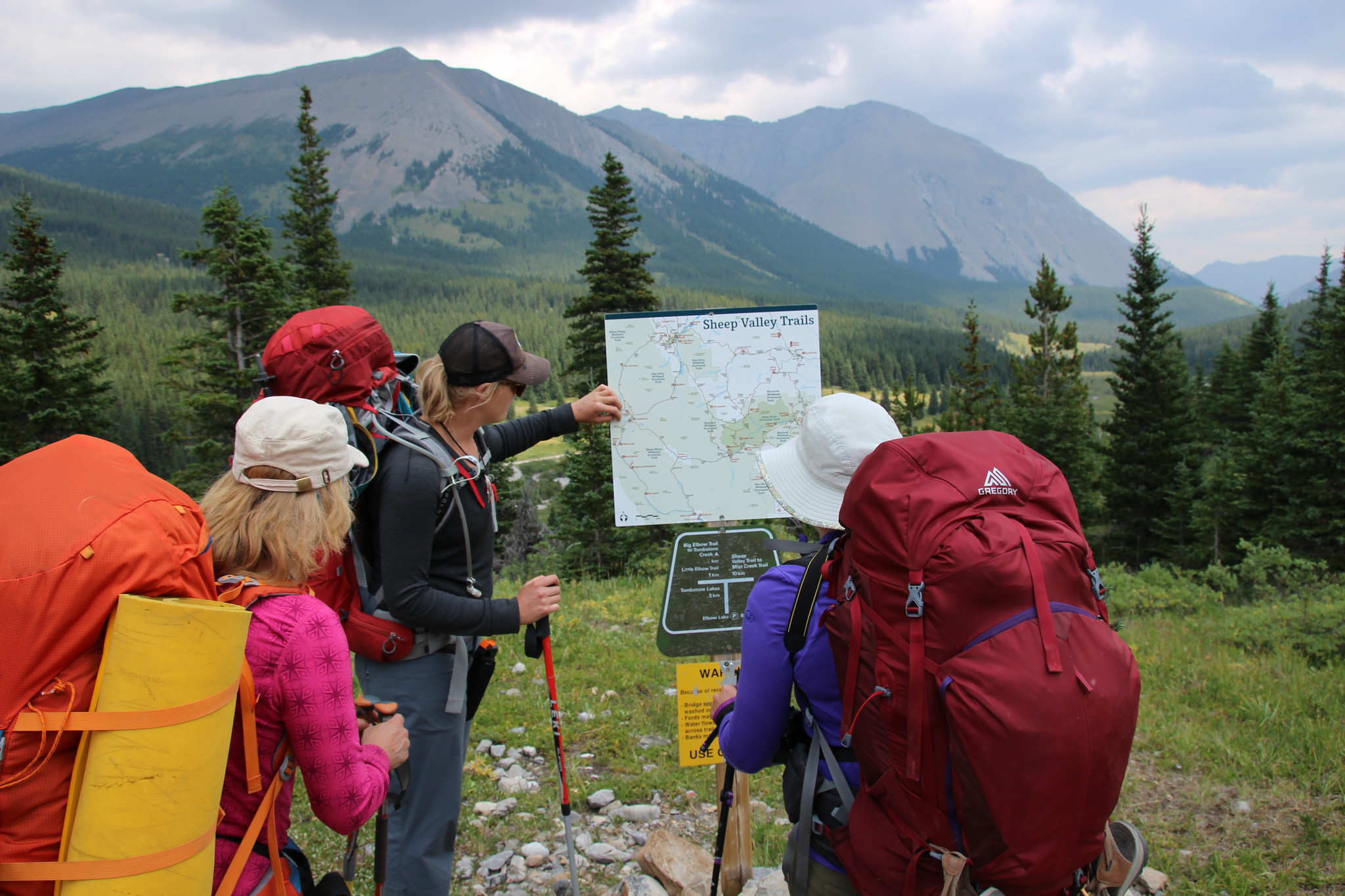
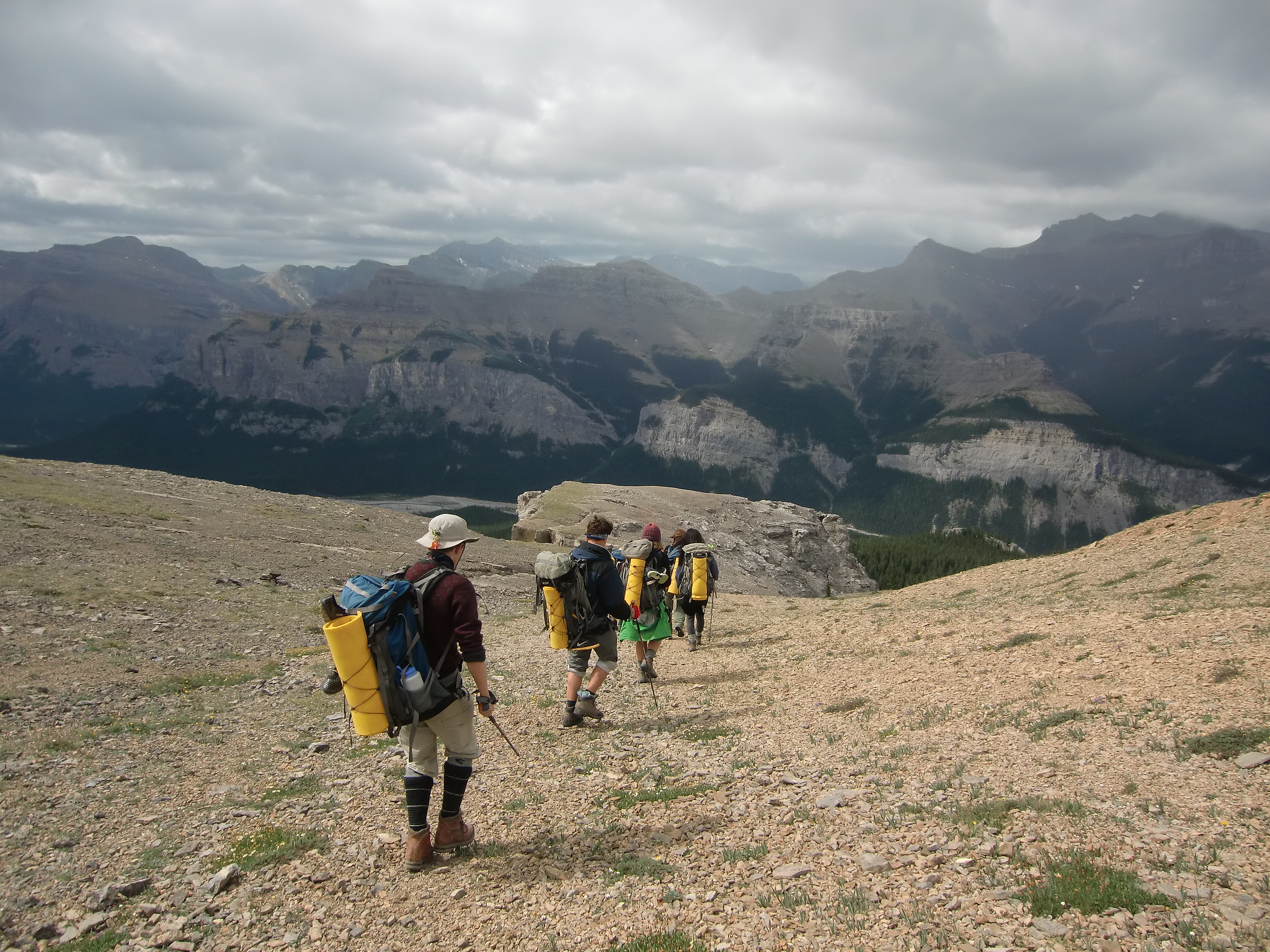
As a long-standing partner to school boards across Canada, Outward Bound Canada (OBC) provides a setting where those capacities are practiced firsthand. Our programs are not a substitute for classroom learning, but a complementary space where responsibility and focus move from theory to experience. When students are trekking through the Rockies or paddling across a remote lake in Northern Ontario, choices have visible, immediate consequences. If you don’t help pitch the tent, you sleep in the rain. If you ignore the map because you’re distracted, the group must retrace its steps. If you opt out of carrying shared gear, everyone moves more slowly.
On a recent Ontario North course, a Grade 9 student arrived resistant to group tasks and hesitant to participate in decision-making. During the first few days, he avoided carrying shared equipment and spoke very little during team discussions. However, as the route became more demanding and the group’s reliance on one another became undeniable, he began volunteering to take on navigation duties and checking in with his teammates. By the end of the program, he reflected that it was the first time he had felt that others were counting on him in a way that changed the outcome for everyone.
That change grew from living responsibility rather than hearing about it. It unfolded over a course where decisions had immediate consequences and participation wasn’t theoretical, but necessary. Because these consequences were natural rather than punishments imposed by adults, they bypassed the constant negotiation that often drains teachers and parents. In the wild, accountability is visible to everyone.
From classroom difficulties to measurable growth
While provincial policies identify the strain in classrooms, outdoor education shows what can happen when students must cooperate to succeed.
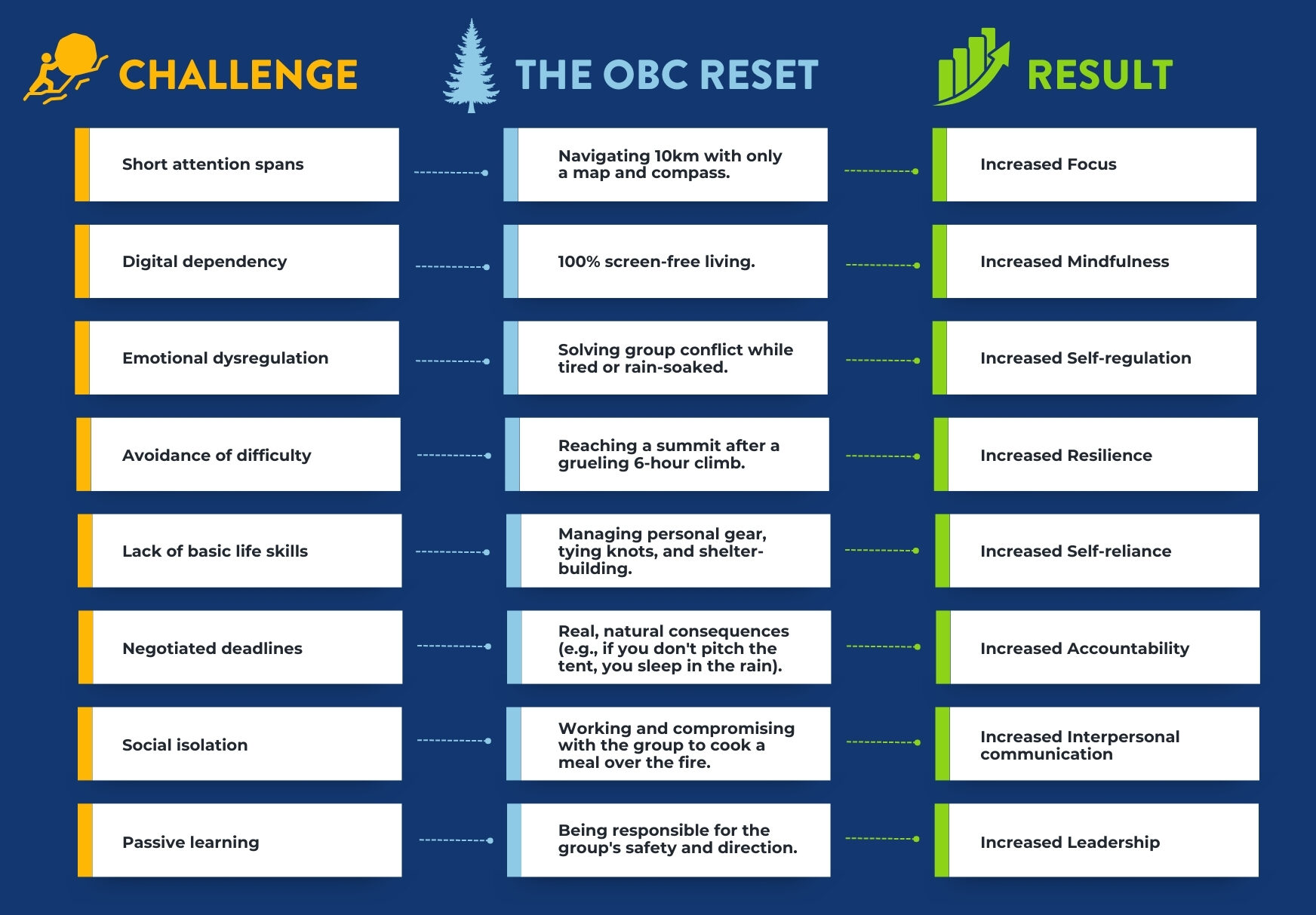
On our programs, distraction becomes visible. Students recognize quickly that paying attention affects safety, progress, and group morale. Communication isn’t optional when dinner depends on it, and perseverance becomes practical when the group still has kilometres to cover before sunset.
Many students return to school with a stronger sense of what they can handle, both physically and mentally. Teachers often report stronger social skills, including increased willingness to participate in group work, greater tolerance for frustration, and improved follow-through on tasks. Those outcomes aren’t abstract life skills; they’re competencies that directly support classroom success.
Real-world results for a digital generation
There is no single reform that will solve the challenges educators are describing. Preparing young people requires experiences that stretch their focus, test their resilience, and make responsibility tangible in everyday decisions.
OBC works with schools to provide this applied layer of learning. While classrooms introduce concepts like teamwork, our programs allow students to live them under real conditions, where choices matter and consequences unfold naturally. The world young people are stepping into will not slow down for them. By linking effort to consequences in ways they can see and feel, we help them find the reset they deserve.
Ready to see the impact for yourself? Explore our programs to learn how they support youth development across Canada.
We believe these experiences should be available to all youth, regardless of financial circumstances. Donate today to help make that possible.