Climate change is already reshaping outdoor education. Here’s how it’s affecting Outward Bound Canada and why we brought the outdoor sector together through our Climate Social Innovation Labs.
It’s no secret that climate change has been drastically affecting the way we live, work, and play in the outdoors. Across Canada, organizations are being pushed to become more adaptable and resilient, and we’re feeling that pressure in very real, practical ways.
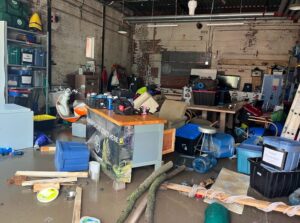
We experienced this firsthand when severe flooding in Toronto left the Don Valley Brick Works, the location of our head office, submerged under four and a half feet of water, with significant restoration costs (some estimates place the cost at $10M, but the true cost is still unclear). While we’ve pivoted to support our upcoming programs, there remains extensive clean-up, the purchasing of new gear and equipment, and insurance claims.
In addition, in British Columbia, we had to pivot our Fire Stewardship Journey due to extreme heat, relocating the course hundreds of kilometers from the interior to the coast where it was safer for operations. This disrupted the program and came with major costs, as relocating a course on short notice requires new plans, transportation, campsite bookings, logistical adjustments, and more.
Outward Bound Canada (OBC) has seen climate change as a growing concern and a major risk in its daily operations for many years now, and it has figured into almost every decision we make, from the planning stage of the year’s programs to our instructors in the field.
What’s becoming increasingly clear is that these are not isolated incidents but patterns that require more than one-off adjustments.
What our teams are seeing on the ground
Ontario Academy Trainer, Bea Beaudoin-Masse, recalls, “I’ve been leading trips in the backcountry for a little over 15 years. In recent years, I have to remind myself that with climate change, I can’t sit idle on that experience. I have to constantly question my hazard assessment and be open to outside information sources. For example, when I grew up, ticks were never mentioned and now the rise of Lyme disease can’t be ignored. As an instructor in the field, I have to trust that my organization is also proactive in updating their risk management plan.”
Ontario Wilderness Program Manager, Scott Dressel, comments:
“Climate change has irrevocably changed the landscape of outdoor education. New considerations surrounding logistics and risk management now must be made every season.
Spring now brings levels of flooding rarely seen in Ontario in the past, often forcing us to relocate operations. In the summer, we need to be far more proactive about preventing heat exhaustion and heat stroke due to the record high temperatures we now frequently experience. During the summer, we also need to be more vigilant about air quality due to the massively increased number of forest fires. The fall can bring unseasonably hot or cold temperatures depending on the year, along with unpredictable precipitation levels. We’ve seen snow in September and droughts in October. Lastly, winter has proven so unpredictable from a snowfall and temperature perspective that it’s impossible to guarantee whether we’ll be hiking on a bare trail or snowshoeing on frozen lakes.
What we know about the four seasons of the year isn’t so accurate anymore. The seasonal patterns we once relied on no longer hold in the same way. Climate change requires organizations to constantly and proactively adapt programming, logistics, and risk management practices to keep up with the current state of the world.”
Rocky Mountain Program Manager, Lisa Arsenault, says:
“Climate change has impacted us in the Rockies in many ways. We now have to consider additional factors during the prep-stage of our courses, such as asking ourselves where there are active fires and whether they’re near our desired course location; what the air quality index and forecast look like due to those fires; as well as trying to gather data on water sources.
Unfortunately, we can’t rely on typical known-water sources like creek beds as we used to, since these are related to snow melt from the winter, limiting access. Less and less water is present over time, and we must always be in areas with water. Where we once could rely on maps to indicate water sheds, we now have to do research, gather beta, and ultimately explore to find water.
While courses are in the field, we’re actively taking air quality measurements so we can respond and make decisions if the air quality decreases while they’re on course. If levels deteriorate, then folks contact our Wilderness On Call and we make a plan to modify activity or evacuate a course. Ultimately, climate change has changed our risk management practices, and that shift begins before a course goes into the field.”
From reactive adjustments to coordinated action: why we created the Climate Social Innovation Labs
As of now, our actions as an organization have been mostly reactive: dealing with sections of trails washed away by floods, carrying smoke level detectors on trips, and reducing the length of hikes due to the heat. But we know that, going forward, we’ll need a more proactive approach to maintain operations. Over time, we began to see that while each organization was adapting in its own way, many of us were facing the same operational pressures.
Rather than continuing to solve those challenges in isolation, we saw an opportunity to come together, share what we were learning, and build stronger practices across the sector.
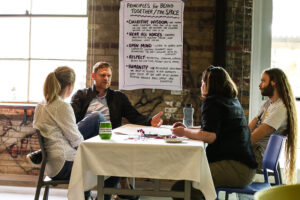
That thinking led us to convene a collection of outdoor organizations from across the country for a full day to explore the impacts and concerns they were experiencing in their own operations through our Climate Social Innovation Labs.
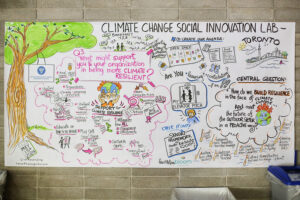
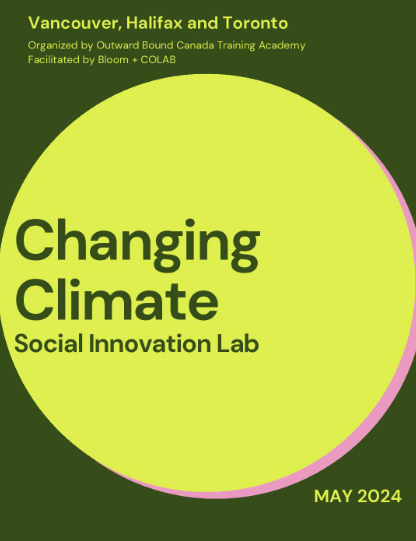
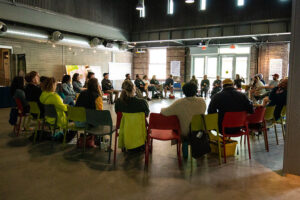
Facilitated by Bloom Consulting and COLAB, OBC’s Training Academy for Outdoor Professionals hosted three Climate Social Innovation Labs in May, bringing together 60+ organizations across Vancouver, Halifax, and Toronto. The Labs created space for candid discussion about the realities organizations are facing and how they are adapting in response.
The goal was to strengthen connection, capacity and capability across the sector, with a practical focus on how outdoor organizations can build resilience and reduce the impacts of climate change on programming and operations.
We felt that, to adequately mitigate climate-related risks in the outdoor sector, a coordinated approach was necessary, built on research, capacity building, and skills development. These events were designed to serve as a starting point for that work.
Reflections from team members who attended
Below are a series of reflections from various team members who attended the events:
Dr. Rob Wallis, PhD; Principal, Education and Curriculum Manager – Toronto:
“It was sobering to witness the level of anxiety in the sector. I asked myself, will we be able to program in our usual areas? Will we have to make back-up plans that include indoor alternatives? Will children be allowed outside for extended periods at all in the coming years? The event hosted serious conversations about serious concerns.
One thing was very apparent: the sector needs to, and will come together to find solutions to adapt to our unpredictable future.
Additionally, the fact that we hosted these discussions about climate resilience at the Don Valley Brick Works, which came under four and a half feet of water a couple months later during the historic Toronto flooding in July is both ironic and unfortunate.”
Bryant Race; British Columbia Logistic and Course Director – Vancouver:
“Heat domes, atmospheric rivers, AQI index, these are all new terms to us here in British Columbia that we are coming to know all too well.
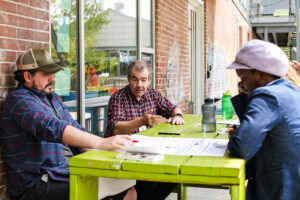
For many of us in the outdoor industry, we’ve been encountering these new challenges in isolation, trying our best to adapt to a rapidly changing climate. Erratic weather patterns have already started to affect our own programming, with the most recent example being the wholesale relocation of a course from interior BC to the coast. This means we must create entirely new systems and networks for how we plan and manage risk when we go into the backcountry. The Climate Lab gave BC-based organizations a chance to share how these new issues have impacted us and what we were doing to help mitigate this risk.
I was encouraged to hear that folks were thinking outside-of-the-box and starting to view these issues as new challenges for us to overcome. The theme of adaptation was ever-present, recognizing that the world is indeed changing, and we must do our best to change with it.”
Thunder Shanti; Atlantic Program Manager – Halifax:
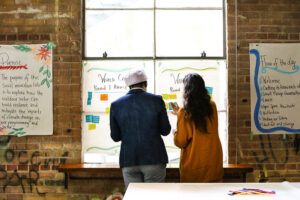
“20 leaders from 14 outdoor organizations shared their concerns about extreme weather, deteriorating environmental quality, and increased risks affecting their operations in Atlantic Canada. They also discussed innovative approaches such as embracing local actions, enhancing communication, and fostering hope to remain adaptable and resilient.
The lab also sparked community commitments, including creating a shared resource list, ongoing learning, developing intergenerational programs, and using digital tools to stay connected. Participants emphasized the importance of hosting ongoing conversations in outdoor spaces and strengthening ties with Indigenous communities.
Personally, the lab’s themes resonated deeply with me as I reflected on our experiences with hurricanes during our programming last fall. We had to adapt our programs, including the difficult decision to evacuate students and shelter in place in a barn. These experiences underscored the importance of proactive planning and community support. The commitments we made at the lab to create shared resources, keep learning from each other, and strengthen connections with Indigenous communities, felt particularly urgent and essential. Our collective dedication to sustainability and resilience, despite the challenges, was a powerful testament to the strength and adaptability of our community.”
What comes next
Following the event, OBC’s Training Academy established an informal network of organizations from the event who expressed a desire to keep the conversation going. A digital summary of the event was also compiled and can be used as a resource for the outdoor sector as a whole to learn and grow from the collective knowledge expressed at these events.
Download the digital summary.
Climate volatility isn’t going away. We must keep learning, adjusting, and supporting one another so outdoor programs can continue safely and responsibly.
The conversation doesn’t end here. Outward Bound Canada is deeply committed to mitigating and adapting to the effects of climate change. The Climate Social Innovation Labs were an early step in this process, and we believe the outdoor sector is stronger when we learn from each other and build resilience together.